

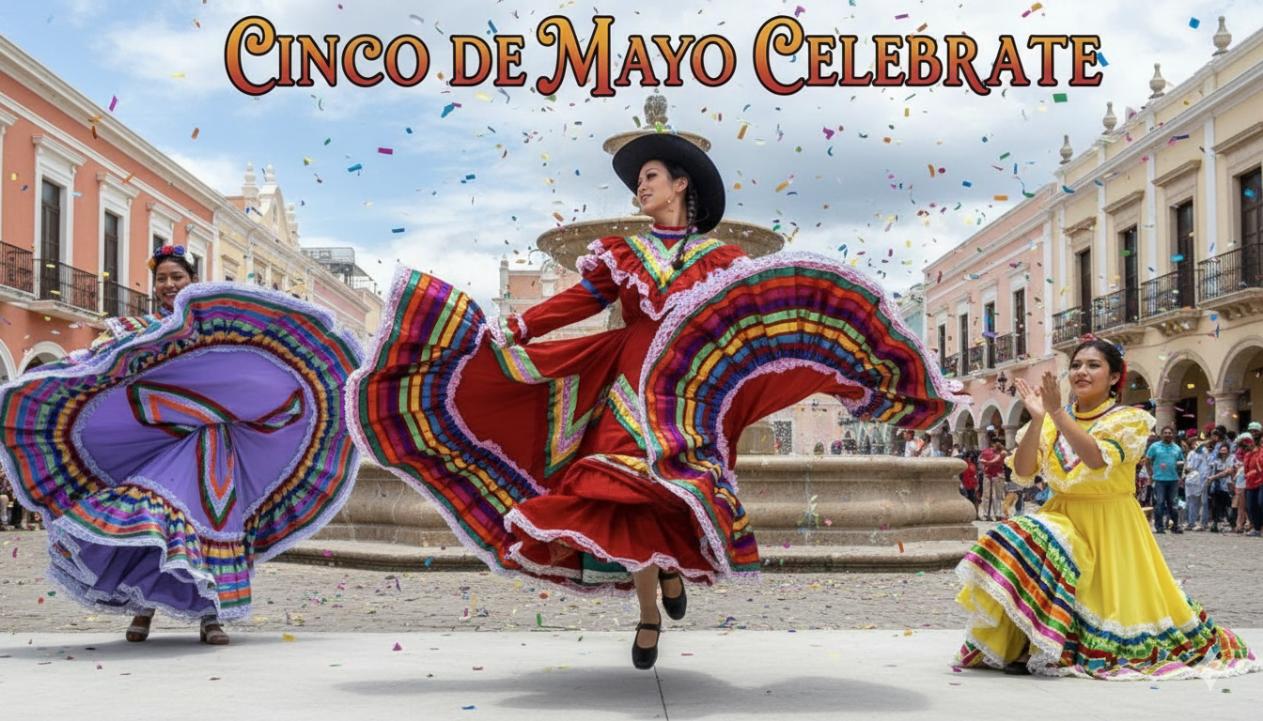
Cinco de Mayo, Spanish for “Fifth of May,” is widely recognized, yet its true historical significance is often misunderstood. Contrary to popular belief, it is not Mexico’s Independence Day. Instead, this annual celebration commemorates the Mexican army’s unexpected and decisive victory over French forces at the Battle of Puebla on May 5, 1862. This guide explores the rich history behind the holiday, its cultural evolution, and the respectful ways to honor its meaning.
The Historical Victory: The Battle of Puebla
To understand what Cinco de Mayo celebrates, one must travel back to a pivotal moment in Mexico’s history. In 1861, after years of internal conflict, Mexico was in financial ruin. President Benito Juárez, a lawyer of Indigenous Zapotec heritage, was forced to suspend all foreign debt payments for two years.
In response, France, Britain, and Spain sent naval forces to demand repayment. While Britain and Spain negotiated and withdrew, France’s Napoleon III saw an opportunity for empire-building. His goal was to establish a French-controlled monarchy in Mexico and curb growing U.S. influence.
-
The March to Puebla: In late 1861, a well-armed French fleet stormed Veracruz, forcing the Mexican government to retreat. Confident of a swift victory, 6,000 elite French troops under General Charles de Lorencez marched toward Mexico City. Their path was blocked at the small town of Puebla de Los Angeles.
-
An Improbable Stand: Awaiting them was a ragtag Mexican force of about 4,000 loyal men, led by Texas-born General Ignacio Zaragoza. Many soldiers were Indigenous Mexicans or of mixed ancestry, and they were vastly outnumbered and poorly supplied.
-
A Symbolic Triumph: On the morning of May 5, 1862, the French launched their assault. The battle raged from daybreak to early evening. Against all odds, the determined Mexican defenders forced the French army into a full retreat. The French suffered nearly 500 casualties, while Mexican losses were fewer than 100.
Although the French would later occupy Mexico City and install Emperor Maximilian I, the Battle of Puebla served as a profound moral victory. It proved to Mexico and the world that the nation could stand up to a mighty foreign power.
Cinco de Mayo vs. Mexican Independence Day: Crucial Differences
A prevalent misconception in the United States is that Cinco de Mayo marks Mexico’s independence. Surveys suggest around 40% of Americans believe this to be true. Clarifying this is essential to understanding Mexican history.
Mexican Independence Day (Día de la Independencia)
-
Date: Celebrated on September 16.
-
What it Commemorates: The start of the Mexican War of Independence from Spain in 1810. On the night of September 15, priest Miguel Hidalgo y Costilla delivered the “Grito de Dolores” (Cry of Dolores), a call to arms that ignited the revolution.
-
Significance: This is Mexico’s most important national holiday, marked by massive celebrations, fireworks, parades, and reenactments across the entire country.
Cinco de Mayo
-
Date: Celebrated on May 5.
-
What it Commemorates: A single, albeit significant, battle victory over France in 1862—more than 50 years after independence.
-
Significance in Mexico: Primarily a regional holiday observed with ceremonies and reenactments in the state of Puebla. It is not a federal holiday; banks, offices, and most businesses remain open nationwide.
A Tale of Two Celebrations: Mexico vs. The United States
The way Cinco de Mayo is observed highlights a fascinating cultural divergence between Mexico and the U.S.
In Mexico: A Ceremonial, Local Observance
In Mexico, the heart of the celebration is in Puebla, where the city (renamed Puebla de Zaragoza) comes alive.
-
Military parades and detailed battle reenactments are central, with participants dressing as Mexican, French, and Zacapoaxtla Indigenous fighters.
-
The city hosts cultural festivals like the Festival Internacional del Mole, honoring mole poblano—a rich, complex sauce often called the holiday’s official dish.
In the United States: A Celebration of Heritage and Culture
The holiday’s journey in the U.S. is unique. Celebrations began in California in 1863, almost immediately after the battle, as a way for Mexican Americans to show solidarity with their homeland.
Key Phases of Growth in the U.S.:
-
1860s Origin: Patriotic juntas (groups) in California and Nevada raised funds and held celebrations to support Mexico’s resistance.
-
Chicano Movement (1960s-70s): Activists reclaimed the day to highlight Mexican American pride, history, and civil rights struggles, identifying with the story of an Indigenous-led force defeating a European invader.
-
Commercial Boom (1980s-Present): Beer, wine, and tequila companies launched major marketing campaigns, transforming Cinco de Mayo into a widely popularized celebration of Mexican culture—and a major commercial event. Today, U.S. beer sales for the day rival those of the Super Bowl.
As a result, in the U.S., the day has evolved into a broad celebration of Mexican-American culture with large festivals in cities like Los Angeles, Chicago, and Denver, featuring parades, mariachi music, folkloric dance (baile folklórico), and street food.
Respectful Celebration: Embracing the True Spirit
Given its complex history and cultural importance, celebrating Cinco de Mayo respectfully is key. Here are some thoughtful ways to honor the day.
What to Embrace
-
Authentic Food & Drink: Go beyond tacos and nachos. Try making mole poblano, sampling different tequilas or mezcal responsibly, or visiting a local Mexican-owned restaurant.
-
Support Authentic Artistry: Explore and support businesses that feature work by Mexican artisans—such as pottery from Oaxaca, textiles, or traditional glassware.
-
Educate Yourself and Others: Learn about the history of the Battle of Puebla and the contributions of Mexican and Mexican-American communities.
What to Avoid
-
Stereotypical Costumes: Avoid wearing sombreros, serapes, or fake mustaches as costumes. These reduce rich cultural traditions to offensive caricatures.
-
Excessive Commercialism: Be mindful that the day is more than a marketing opportunity for alcohol and party goods.
-
Mistaking it for a “Mexican St. Patrick’s Day”: It is not primarily a drinking holiday; its roots are in a meaningful historical event.
Conclusion: More Than a Fiesta
So, what does Cinco de Mayo celebrate? At its core, it commemorates a historic moment of resilience and national pride—the day a outgunned Mexican army defended its sovereignty against a formidable foreign power. While its expression has evolved, especially in the United States into a vibrant celebration of Mexican-American culture, understanding this origin story is vital.
By moving beyond stereotypes and commercial trappings, we can appreciate Cinco de Mayo for what it truly represents: a testament to courage, cultural pride, and the enduring spirit of a people. Whether you enjoy a plate of mole poblano, listen to the vibrant sounds of mariachi, or simply share the true story of May 5, 1862, you can be part of honoring this meaningful chapter in history.