

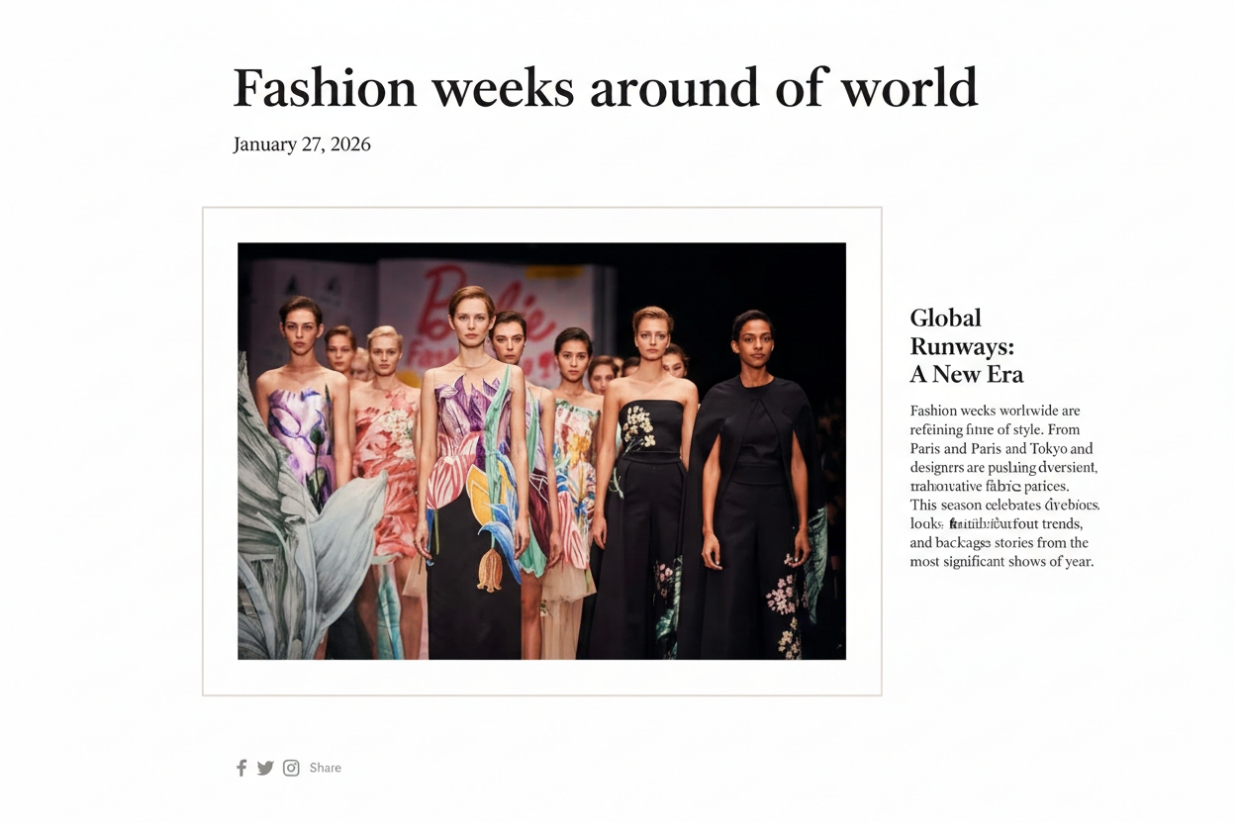
Fashion weeks around the world are more than glittering runways and celebrity front rows. They’re a rhythm of the global fashion ecosystem — where designers, buyers, editors, stylists, and curious onlookers converge to see which ideas move from sketchbooks to shop racks. In this article I’ll walk you through what fashion weeks actually do, why they still matter, and how to take part meaningfully whether you’re a student, a small designer, a content creator, or simply a devoted fan.
- What are fashion weeks and why do they exist?
- A quick tour of the global calendar and what each hub emphasizes
- Practical benefits of participating (realistic, not hyped)
- How to make the most of fashion weeks: a practical playbook
- What to do if you can’t attend in person
- Who should go — and who should be cautious
- Common mistakes and myths — what I see most often
- How to evaluate success after the week ends
- Ethical considerations and media etiquette
- Semantic phrases and ways to talk about fashion weeks
- Short FAQ
- Final thoughts — an honest wrap
This is written to be useful, not flashy. I draw on industry reporting, interviews with designers and editors, and practical knowledge collected from countless behind-the-scenes conversations. Expect actionable advice, common pitfalls to avoid, and a clear sense of who benefits most from attending — and who should think twice.
What are fashion weeks and why do they exist?
At their core, fashion weeks are timed events where designers show seasonal collections to the industry.
They serve multiple practical functions: previewing upcoming trends, attracting press coverage, securing retail orders, and creating content for editorials and social channels. Beyond spectacle, they are a business rhythm — structured to help the supply chain plan production, distribution, and marketing.
There are different formats:
- Runway shows: choreographed presentations with models, lighting, and music.
- Presentations and lookbooks: quieter, appointment-based viewings in showrooms.
- Trade shows: B2B spaces where retailers and buyers place orders.
- Hybrid and digital events: livestreams, films, and private viewings that supplement or replace physical shows.
Understanding these formats helps you pick where to focus your time and budget. Not every “fashion week” is a scale replica of the Big Four (New York, London, Milan, Paris); many regional weeks prioritize commerce, local talent, or cultural storytelling.
A quick tour of the global calendar and what each hub emphasizes
Below are broad, stable characteristics of several well-known fashion cities. These are general tendencies — individual designers may deviate — but the patterns help you choose which weeks align with your goals.
New York — commercial energy and street-smart design
New York’s fashion weeks tend to blend commercial ready-to-wear with progressive young talent. Buyers and press converge for accessible collections that translate quickly into retail. Expect an emphasis on wearability and media-friendly campaigns.
London — experimental, concept-driven, and emerging talent
London historically champions experimental design, deconstruction, and conceptual work from fashion schools. It’s a place where young designers get noticed for originality and storytelling.
Milan — craftsmanship and luxury houses
Milan is synonymous with Italian tailoring and luxury houses. Collections here often highlight fabric, cut, and artisanal techniques — an atmosphere that appeals to heritage brands and luxury buyers.
Paris — haute couture, luxury signalling, and global narrative
Paris hosts haute couture and the biggest luxury narratives in fashion. It’s also a major editorial center; shows often double as cultural moments that set tone and mood for seasons to come.
Seoul and Tokyo — tech, youth culture, and street innovation
Seoul and Tokyo bring fresh energy influenced by street culture, music, and youth trends. These cities often translate local pop culture into global appeal.
São Paulo, Lagos, Mexico City, and Mumbai — regional expression and growth markets
Emerging fashion weeks in these cities showcase local craft, textiles, and voices. They’re also growing commercial markets and important sites for cultural exchange.
Other notable scenes: Dubai, Shanghai, Berlin, Copenhagen, Buenos Aires
Each of these hubs has a distinct focus — luxury and spectacle, market expansion, sustainable design, Scandinavian minimalism, and local identity, respectively.
Practical benefits of participating (realistic, not hyped)
Fashion weeks can feel aspirational, but they deliver specific, measurable benefits if you go in with a plan.
For designers:
- Visibility to buyers and editors.
- Networking opportunities with manufacturers and collaborators.
- Immediate market feedback on collections.
For buyers and retailers:
- Early access to seasonal collections and the ability to place orders.
- The chance to compare multiple designers in one place.
- Spotting trends and niche brands before they scale.
For editors and content creators:
- Fresh editorial material and visuals for seasonal storytelling.
- Story leads — designer interviews, backstage access, and street style.
- Partnerships and brand collaborations grounded in timely coverage.
For students and emerging talent:
- Learning by observation — staging, casting, and show dynamics.
- Opportunities to volunteer, intern, or assist backstage.
- Building industry contacts that can become long-term mentors.
For consumers and local audiences:
- Cultural programming, pop-ups, and exhibitions that connect fashion to broader arts.
- Greater access to designers through presentations and public events.
These benefits are real, but they require time, preparation, and a clear objective. Showing up without a goal wastes opportunities and money.
How to make the most of fashion weeks: a practical playbook
Whether you’re attending one show or trying to navigate multiple cities, a strategy will save you stress and maximize returns. Below I lay out a step-by-step approach you can adapt.
1. Define your mission (two lines of clarity)
Decide what you want to achieve: secure orders, gather editorial content, scout interns, or learn staging techniques. Make one primary goal and a couple of secondary goals.
If your objective is vague, you’ll be pulled in every direction and miss crucial meetings.
2. Research the schedule and prioritize
Fashion weeks publish calendars well in advance. Choose events that align with your mission. For example, if you’re a small boutique buyer, focus on presentations and showroom days rather than the busiest runway slots.
Prioritizing prevents burnout and keeps travel costs down.
3. Build a compact packing list
Packing wisely matters more than dressing to impress. Essentials:
- Comfortable shoes for long days on cobblestones and back-to-back shows.
- A compact camera or phone with reliable stabilization.
- Extra charger and a portable battery.
- Business cards (or a digital contact card) and a small notebook.
Pack for layering; show venues vary from chilly vaulted spaces to hot studios.
4. Prepare outreach and appointments
If you want to meet designers, PR teams, or buyers, reach out in advance. Many presentations and showroom visits are by appointment. Be concise in your messages: who you are, what you do, and why you want a meeting.
If you’re a content creator, offer clear value: sample story angles, reach metrics, or past editorial features.
5. Master the day-of logistics
Arrive early for shows with tight seating. Bring a small emergency kit (safety pins, band-aids, Tide stick). For scheduling, leave time between appointments for travel and unexpected delays.
Know local transport options — metros are often faster than taxis during peak midday traffic.
6. Networking without awkwardness
Networking works best when it’s reciprocal. Offer to introduce people, share useful contacts, or promote a collaborator’s work. Keep conversations short and follow up with a polite email within 48 hours.
Bring a two-line “elevator pitch” for who you are and what you’re seeking.
7. Create content with intention
Whether you’re an editor, photographer, or influencer, think in editorial blocks: hero images, detail shots, quotes, and behind-the-scenes moments. A single high-quality image and a short caption often outperform dozens of mediocre shots.
Respect photographers’ and designers’ media policies — many brands restrict backstage photos or require photographer credits.
8. Be mindful of budgets
Fashion weeks cost money: flights, accommodation, show tickets, meals, and transport add up. You can reduce expenses by:
- Sharing accommodation with a colleague.
- Prioritizing free public programming or trade-day appointments.
- Applying for press passes or sponsorships if eligible.
Track expenses in a simple spreadsheet so you can evaluate ROI afterward.
9. Follow sustainability and cultural etiquette
Ask permission before photographing people in private areas. Respect local customs around dress and behavior. If sustainability is a priority, choose designers and vendors who align with those values and highlight them in your coverage.
Being thoughtful fosters long-term industry relationships.
What to do if you can’t attend in person
Not everyone can travel to multiple cities. Thankfully, there are meaningful ways to participate remotely.
- Livestreams and digital lookbooks: Many brands release films, editorials, and livestreams the day of the show. Treat these like press screenings — take notes and follow up with contacts.
- Virtual appointments: Book showroom or showroom-turned-virtual appointments. These can be efficient for sample review and negotiation.
- Roundups and trend reports: Compile thoughtful, original analysis that adds value beyond simple image reposts. Editors and buyers appreciate curated perspectives.
- Local activations: Host viewing parties, panels, or pop-ups to translate global moments to your community.
Remote engagement requires more intentionality — don’t just watch; create a plan to react, repackage, and follow up.
Who should go — and who should be cautious
Fashion weeks aren’t one-size-fits-all. Here’s a realistic breakdown.
Ideal attendees
- Buyers and retail buyers who need to place seasonal orders.
- Editors and stylists seeking content and talent.
- Emerging designers ready to be seen by press and trade.
- Students and assistants who want to learn and volunteer.
- Fashion-tech entrepreneurs testing products with early adopters.
Who should be cautious
- Hobbyists with a tight budget may find the cost-to-benefit ratio low. Prioritize local events or digital coverage instead.
- Brands not production-ready should avoid the expectations of a full runway; a targeted showroom or pop-up can be more effective.
- People seeking celebrity status — that rarely happens by accident. Focus on craft and relationships instead.
If your goal is vague — “I want to be famous” — pause and refine a concrete objective. Real careers are built from consistent output, not single appearances.
Common mistakes and myths — what I see most often
Below are recurring errors that trip up attendees and brands. Avoid these to get more from the experience.
Mistake: Treating shows as the only avenue
Some brands pour all resources into a single runway without investing in production, sales, or PR follow-through. Shows generate headlines; the real work is converting interest into orders and partnerships.
Myth: Bigger shows equal guaranteed success
A splashy runway can create buzz, but it doesn’t guarantee retail distribution or long-term recognition. Smaller, strategic presentations with targeted buyers often lead to better commercial outcomes for many designers.
Mistake: Overlooking logistics and timing
Underestimating travel time between venues, last-minute sample issues, and production quirks is common. Build contingency time and a checklist for critical items.
Myth: You must hire a celebrity to succeed
Celebrity endorsements can help, but thoughtful collaborations, strong visual storytelling, and consistent brand voice often have more durable impact.
Mistake: Ignoring sustainability as an afterthought
Greenwashing or token gestures are visible and can harm reputation. If sustainability matters to your brand, integrate it into sourcing and production — and be transparent about limitations and progress.
Myth: Street style alone defines trends
Street style is a cultural barometer, but trends are forged by a confluence of runway narratives, retail uptake, social media, and wearability. Don’t confuse high-visibility moments with mass-market adoption.
How to evaluate success after the week ends
The week itself is intense — the follow-up is where results materialize. Use concrete metrics tied to your original goals.
Media and editorial outcomes
- Number of published features or mentions.
- Quality of placements (outlets aligned with your target audience).
Commercial outcomes
- Buyer leads and placed orders.
- Wholesale inquiries or confirmed stockists.
Network outcomes
- New contacts with clear next steps (meetings, sample requests).
- Follow-through rate on follow-up emails.
Creative outcomes
- Content assets produced (images, interviews) and their engagement rates.
Set a 30- and 90-day follow-up plan. Good relationships often take months, not days, to convert.
Ethical considerations and media etiquette
Fashion weeks are public-facing but often include private, invitation-only moments. Honor boundaries.
- Don’t publish backstage photos without permission.
- Always credit photographers and PR contacts.
- Ask before tagging individuals who are not public figures.
- If offered exclusives, be transparent about restrictions when reporting.
These practices build trust and help you maintain professional access over time.
Semantic phrases and ways to talk about fashion weeks
Using related phrases enhances clarity and SEO naturally. Sprinkle these where relevant:
- runway shows and presentations
- seasonal collections (spring/summer, autumn/winter)
- ready-to-wear and haute couture
- showroom appointments and trade days
- fashion capitals and regional weeks
- street style moments and editorial coverage
- designer showcases and buyer previews
These variations help readers and search engines understand context without repetitive phrasing.
Short FAQ
Q: Are fashion weeks only for industry insiders?
No. While many events are trade-only, there are public shows, exhibitions, and community programming. Digital streams and lookbooks also open access.
Q: How far in advance should I plan attendance?
Plan at least 2–3 months ahead for appointments and travel. For press accreditation or show tickets, earlier is safer; for showroom visits, a few weeks may suffice.
Q: Can small brands succeed without a runway show?
Absolutely. Showrooms, digital lookbooks, pop-ups, and targeted buyer appointments often deliver better ROI for resource-limited brands.
Q: How do I get accredited as press?
Media accreditation requirements vary. Prepare a media kit, past clips, and a concise pitch about your outlet or platform. Apply through official fashion week press portals.
Q: Should I pay for influencers or celebrities to attend?
Paid placements can be effective but are not a substitute for quality design and strategy. Be selective: choose collaborators whose audience aligns with your brand and who add editorial value.
Final thoughts — an honest wrap
Fashion weeks around the world remain influential precisely because they combine commerce, craft, and culture in concentrated bursts. But they aren’t magic. Impact follows preparation, clear objectives, and sustained follow-up. Whether you’re a buyer, writer, designer, or student, approach them with a plan, respect for logistics and etiquette, and realistic expectations.
If you’re new to fashion weeks, start small: attend one city, prioritize a few appointments, and focus on relationships rather than headline-grabbing moments. Over time you’ll learn the rhythms and find the formats that deliver the most value for your goals.