

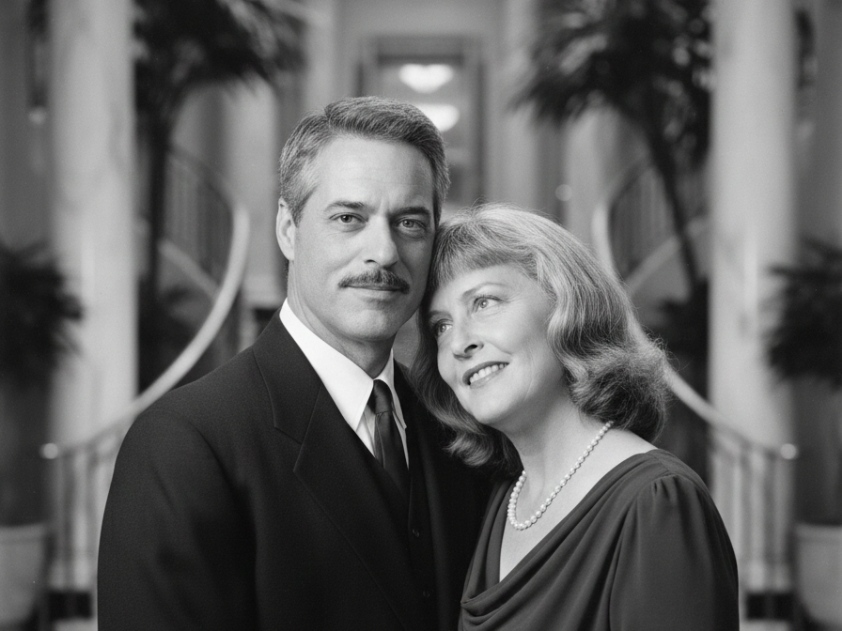
Beyond the Ice: The Untold Love Story of Sue Aikens and Michael Heinrich
The wind at the Kavik River Camp does not howl; it screams. It is a living, breathing entity that claws at the siding of the small, modular buildings sitting alone on the North Slope of Alaska, nearly 200 miles north of the Arctic Circle. This is a place where the mercury regularly plunges to sixty degrees below zero, a place where a simple mistake—a forgotten glove, a misstep on the ice, a jammed rifle—can mean the difference between seeing the sunrise or freezing to death in the eternal dark of winter. For years, the world has watched Sue Aikens, the breakout star of Life Below Zero, navigate this brutal landscape. We have seen her stitch her own wounds, stare down grizzly bears, and maintain a solitary vigil over a frozen kingdom that would break most men in a week.
She is known as the tough-as-nails survivor, the woman who famously declared, “If it hurts, don’t think about it.” But beneath the layers of caribou fur and the hardened exterior necessitated by survival, there is a heart that has known a warmth fiercer than any woodstove. There is a story often obscured by the blizzards and the bear attacks—a story of companionship in the most isolated place on Earth. It is the story of Sue Aikens husband Michael Heinrich, a man who, for a time, was the anchor in the storm of her life.
To understand Michael Heinrich, and the sheer magnitude of what it meant to be the husband of Sue Aikens, one must first understand the woman herself and the world she inhabits. Sue is not merely a resident of the Arctic; she is a product of it. Born in 1963 and transplanted to Alaska as a child, she learned early that reliance on others was a luxury she could rarely afford. Abandoned in the wilderness at a young age, she didn’t just survive; she adapted. She became part of the food chain, learning to think like the predators that stalked the tundra. By the time she took over the Kavik River Camp—an old oil exploration camp turned hunting outpost—she was already a legend in her own mind, a woman who had decided that the complications of human society were far more dangerous than the honest brutality of nature.
In “the lower 48,” relationships are often defined by compromise. You argue about whose turn it is to do the dishes, where to go for dinner, or which show to watch on Netflix. But in Kavik, a relationship is a survival contract. To love someone at 69 degrees North latitude is to place your life in their hands every single day. It requires a level of trust that most suburban couples will never comprehend. When Sue Aikens allowed someone into her heart, she was also allowing them into her command center, her fortress.
Enter Michael Heinrich. While the public record of Sue’s romantic life has often been a tapestry of rumors, tragic losses, and fierce privacy, the name Michael Heinrich represents a pivotal chapter in the saga of the “tundra queen.” Unlike the fleeting visitors who come to Kavik for the thrill of the hunt and then retreat to their heated homes, a husband in this environment must be made of sterner stuff. He wasn’t just a spouse; in the context of the Arctic, Sue Aikens husband Michael Heinrich was a co-pilot in a vessel drifting through a frozen ocean.
The dynamics of their relationship were carved out of necessity. In a place where the sun doesn’t rise for weeks at a time, the psychological weight of isolation is crushing. Many men have tried to live the subsistence lifestyle and failed, their minds unravelling in the silence. For Michael to stand beside Sue, he had to possess a quiet strength, a resilience that mirrored her own. They weren’t just sharing a bed; they were sharing the burden of existence. Every generator repair, every cleared runway, every hunted meal was a joint victory against the elements.
Those who knew them, or saw the glimpses of their life together, understood that their bond was forged in the fire of adversity. There is a specific kind of intimacy that develops when you are the only two people for hundreds of miles. The trivialities of modern marriage strip away. There is no space for petty grievances when a blizzard is burying your fuel supply. In this vacuum, Sue Aikens husband Michael Heinrich became more than a partner; he was her only reflection. When she looked at him, she saw the only other human being who truly understood the reality of her days.
It is often said that opposites attract, but in the Arctic, similarities survive. Sue has described her past relationships with a candor that is both refreshing and heartbreaking. She has spoken of husbands who couldn’t hack the lifestyle, men who loved her but hated the cold, or men who tried to change the wildness in her. But with Michael, there was a sense of alignment. He respected the land as she did. He understood that you do not conquer the Arctic; you submit to it, and if you are lucky, it lets you live. This shared philosophy is what likely cemented their bond. It takes a unique man to love a woman who is accustomed to being the alpha predator in her own territory. It requires an absence of ego and an abundance of courage.
The daily life of Sue Aikens and her husband Michael Heinrich would have been a rhythm of labor and rugged romance. Imagine a “date night” in Kavik. It isn’t a candlelit dinner at a bistro; it’s sharing a fresh caribou steak cooked on a griddle while the generator hums its steady, life-sustaining rhythm in the background. It’s watching the Aurora Borealis dance overhead, knowing that the green and purple lights are the only show in town. It’s the quiet comfort of knowing that if the wolves come scratching at the door, there is someone else standing there with a loaded rifle. That is the romance of the frontier—unpolished, raw, and deeply essential.
However, the story of Sue Aikens is rarely one of prolonged happiness. It is a story punctuated by loss. The Arctic takes. It takes warmth, it takes energy, and eventually, it takes life. The tragedy that haunts Sue’s narrative is that the people she loves often cannot follow where she needs to go, or they are taken from her too soon. The details surrounding Sue Aikens husband Michael Heinrich and his passing in 2019 are shrouded in the quiet dignity that Sue maintains about her deepest personal pain. But the impact of that loss is written on the landscape of her life.
Grief in the city is loud. It is funerals and casseroles and houses full of weeping relatives. Grief in Kavik is silent. It is a deafening silence that settles over the camp when the person who used to fill the empty chair is gone. When Michael passed, Sue was left not just with the emotional void, but with the practical reality of being alone again. The generator still needed fixing. The runway still needed clearing. The bears didn’t stop coming just because her heart was broken. This is the cruelest lesson of the wild: it does not mourn with you. It demands that you keep moving.
And Sue did. She kept moving. But the memory of Sue Aikens husband Michael Heinrich remains a ghost in the machine of Kavik. He is there in the way she checks the perimeter, in the way she speaks to the foxes, in the way she looks at the horizon. His legacy is not just in who he was, but in how he helped shape the survivor she continues to be. He proved that even in the most inhospitable place on the planet, love can take root. It may be gnarled and weathered like the scrub brush of the tundra, but it is alive.
The narrative of Sue Aikens is often framed around her physical injuries—the bear attack that nearly tore her arm off, the collarbone shattered in a crash. But the injuries to the heart are the ones that scar over the hardest. The loss of a husband like Michael creates a callus on the soul. It makes you tougher, yes, but it also makes you more protective of the solitude you have left. Sue’s fierce independence is not just a personality trait; it is a defense mechanism. If you don’t let anyone in, you don’t have to watch them leave. And yet, she remains open to the world, sharing her life with millions of viewers, inviting strangers to her camp, and continuing to seek connection in a disconnected world.
One of the most compelling aspects of the relationship between Sue Aikens and husband Michael Heinrich was the “long-distance” nature that characterized parts of their union. In the modern world, long-distance means FaceTime calls and flights. For Sue, it meant months of radio silence, or treacherous journeys across ice roads that essentially dissolve in the summer. It meant loving someone across a void of physical space that was dangerous to cross. This adds another layer to their story—the longing. To love someone you cannot easily reach is a specific kind of torture, but it also crystallizes what matters. When they were together, the time was precious. It wasn’t wasted on the trivialities that plague conventional marriages. Every moment was stolen from the jaws of the Arctic winter.
As we look at Sue Aikens today, continuing her vigil at Kavik River Camp, we see a woman who is the sum of her experiences. She is the little girl abandoned in the snow, the young mother fighting for her children, the survivor of the grizzly, and the widow of Michael Heinrich. Each of these identities is layered over the other, creating a complex human geography as rugged as the Brooks Range.
The presence of Sue Aikens husband Michael Heinrich in her biography serves as a reminder that even the strongest among us crave a witness to our lives. We all want someone to see us—truly see us—when our guard is down. For a woman who lives her life in front of cameras, being “seen” is a complicated concept. The cameras see the character, the “badass,” the hunter. Michael saw Sue. He saw the fatigue, the fear, the softness that the cameras rarely capture. He saw the woman who sometimes just wanted to be held, even if she was wearing a holster.
In the end, the story of Sue Aikens husband Michael Heinrich is not just a footnote in a reality TV star’s bio. It is a testament to the human capacity for connection in the most unlikely of circumstances. It challenges us to redefine what we think of as romance. Is it flowers and chocolates? Or is it standing back-to-back with someone in the middle of a freezing nowhere, facing the dark together?
As the sun dips below the horizon at Kavik, casting the camp in the blue twilight of the polar night, one can imagine Sue sitting with a cup of coffee, looking out at the expanse of white. The wind is still screaming. The wolves are still prowling. But in the quiet corners of the camp, the memory of Michael remains—a warm ember in the cold ash of the past. He is the reminder that she was loved, and that she loved in return, in a place where survival is the only law. And perhaps, that love is the greatest survival story of all.
The Architecture of Isolation: How Love Survives the Tundra
To truly grasp the weight of the relationship between Sue Aikens and her husband Michael Heinrich, one must zoom out from the individuals and look at the architecture of their world. Kavik is not a home in the traditional sense; it is a machine designed to keep human beings alive in a place where they biologically do not belong. The walls are insulated to retain every calorie of heat. The windows are triple-paned eyes looking out onto a landscape that looks like the surface of the moon. In this machine, every sound is amplified. The hum of the heater, the crackle of the radio, the footsteps on the linoleum.
In such a confined space, a marriage undergoes a pressure test. There is nowhere to hide. You cannot storm out of the house and go for a drive to cool off—there are no roads, and “outside” is a death sentence without preparation. This forced proximity acts as a crucible. It burns away the superficial layers of personality. What is left is the core. For Sue Aikens and husband Michael Heinrich, this meant that they knew each other’s cores intimately. They knew the way the other breathed in their sleep. They knew the specific cadence of the other’s silence.
This level of knowledge can be terrifying. It is why many relationships fracture during long winters or lockdowns. But for Sue and Michael, it seems to have been the glue. Reports and snippets of their time together suggest a relationship built on a profound mutual respect for competence. In the Arctic, competence is the highest virtue. Being “nice” is irrelevant; being “capable” is vital. Sue, who has spent decades mastering the art of mechanical repair, hunting, and logistics, would not have suffered a fool. Michael had to be her equal in capability, or at least in his willingness to learn and endure.
There is a scene that plays out in the imagination, derived from the snippets of life Sue has shared over the years. It is the dead of winter. The sun has not been seen for weeks. The temperature is -50°F. The wind chill is lethal. Inside the main camp building, the lights are low to conserve power. Sue is cleaning a rifle at the table. Michael is checking the weather logs. They don’t need to speak. The silence between them is comfortable, a shared blanket against the howling world outside. This is the “human” side of the headline Sue Aikens husband Michael Heinrich. It is the quiet, undramatic endurance of two people deciding to be alone together.
The tragedy of his death, therefore, is not just the loss of a person, but the shattering of this ecosystem. When one part of the machine breaks, the whole thing shudders. Sue’s grief was likely compounded by the sudden return of absolute self-reliance. When you have had someone to watch your back, the sudden absence of those eyes leaves you exposed. Every shadow looks a little darker; every noise sounds a little sharper.
Yet, Sue’s narrative following the loss of Michael Heinrich has been one of furious activity. She expanded the camp. She fought legal battles. She continued filming. This is a common response to grief among survivors. Movement is life. Stagnation is death. If she stopped to dwell too long on the empty chair, the cold might finally get in. So she filled the space with work, with projects, with the sheer noise of living.
But the audience, those of us watching from our heated living rooms, felt the shift. We saw a Sue who was perhaps a little harder, a little more protective of her inner world. The keyword Sue Aikens husband Michael Heinrich is searched by so many because we instinctively sense that there is a missing piece to the puzzle of Sue Aikens. We see the armor, and we want to know about the chink in it. We want to know about the person who was allowed behind the wall.
Michael Heinrich represents that vulnerability. He is the proof that Sue is not a stone monolith. She is a woman who took a chance on love in a place where the odds are always stacked against you. And even though he is gone, the fact that he was there at all is a victory. It contradicts the narrative of the “crazy hermit woman.” It paints a picture of a life that was full, complex, and deeply human.
The Ghost of the Pan-American Highway: A Love Across Miles
Another facet of the Sue Aikens husband Michael Heinrich story that resonates is the geography of their separation. Before his passing, and during the times they were apart, their relationship spanned vast distances. There is a romance to the idea of a love that stretches like a taut wire across the continent. It harkens back to the days of letters sent by sea, of lovers waiting months for a word. In an age of instant gratification, the patience required for their relationship was an anomaly.
This distance likely fueled the intensity of their time together. When you know your time is limited, you don’t waste it. You don’t spend dinner looking at your phone. You look at each other. You memorize the face across from you because you don’t know when you will see it again. This is a lesson that Sue often tries to impart to her viewers: the preciousness of the “now.” In the Arctic, the “now” is all you have. The future is never guaranteed.
The legacy of Michael Heinrich is thus woven into the philosophy of Kavik. It is in the insistence on seizing the day. It is in the refusal to be cowed by fear. Sue often speaks about not letting fear dictate your life. Loving someone when you have so much to lose is a brave act. Losing them and continuing to stand tall is even braver.
As the years pass, the name Michael Heinrich may fade from the immediate discourse of Life Below Zero fans, replaced by new plotlines and new challenges. But in the chronicle of Sue Aikens’ life, he remains a foundational chapter. He was the summer thaw in a life of winter. He was the soft place to land in a hard world. And for a brief, shining moment, he was the husband who made the end of the world feel like home.
In the end, the article you are reading, centered on Sue Aikens husband Michael Heinrich, is not just an obituary or a biography. It is an acknowledgment of the invisible threads that hold us together. Even a woman who lives 200 miles from civilization needs those threads. Even a survivor needs a hand to hold. Michael was that hand. And though he is gone, the grip remains—a phantom sensation that reminds Sue, and us, that no one truly survives alone. We carry our dead with us, like supplies in a rucksack, their memory fueling us for the miles we have yet to walk.
For Sue Aikens, the walk continues. The wind still screams at Kavik. The bears still roam. But she walks with the knowledge that she has loved and been loved. And in the cold calculus of the Arctic, that is the only warmth that truly lasts.